Corrugated boxes are the backbone of modern packaging and logistics. Whether you're ordering products online, shipping industrial equipment, or packaging food and pharmaceutical products, there's a high chance the product reaches you in a corrugated box. Their exceptional strength, lightweight construction, and cost-effectiveness make them one of the most widely used packaging solutions across industries.
At Asian Packaging Industries, we manufacture high-quality corrugated packaging solutions designed to protect products during storage, handling, and transportation. This guide explains everything beginners need to know about corrugated boxes, including how they are made, their structure, types, benefits, and applications.
What is a Corrugated Box?
A corrugated box is a packaging box made from corrugated fibreboard, a material consisting of one or more fluted (wavy) paper layers sandwiched between flat linerboards. This unique structure provides excellent strength while keeping the box lightweight.
Unlike ordinary cardboard, corrugated board contains a fluted medium that acts as a cushion, absorbing impacts and improving stacking strength. This makes corrugated boxes suitable for transporting products safely over long distances.
Corrugated boxes are widely used because they offer the perfect balance of durability, affordability, printability, and sustainability.
Understanding the Structure of a Corrugated Box
A corrugated board consists of three basic components.
1. Outer Liner
The outer liner is the external surface of the box. It provides structural strength and acts as the printing surface for branding, product details, and handling instructions.
2. Corrugated Medium (Fluting)
The fluted paper is the heart of the board. These wave-shaped arches provide cushioning, absorb shocks, and increase compression strength.
3. Inner Liner
The inner liner strengthens the board from the inside while protecting the packaged product.
Together, these three layers create a packaging material that is strong, lightweight, and highly durable.
How is a Corrugated Box Manufactured?
The manufacturing process involves several carefully controlled steps to ensure consistent quality.
Paper Selection
The process begins with selecting kraft paper based on the required GSM, Burst Factor (BF), and moisture content.
Corrugation
The paper passes through heated corrugating rollers that create the fluted medium.
Gluing
The fluted medium is bonded to liner papers using starch-based adhesive to form corrugated board.
Drying
The board passes through a heating section to cure the adhesive and stabilize the structure.
Printing
Depending on customer requirements, the sheets are printed using flexographic or offset printing.
Die Cutting & Slotting
The printed sheets are cut, slotted, creased, and shaped into box blanks.
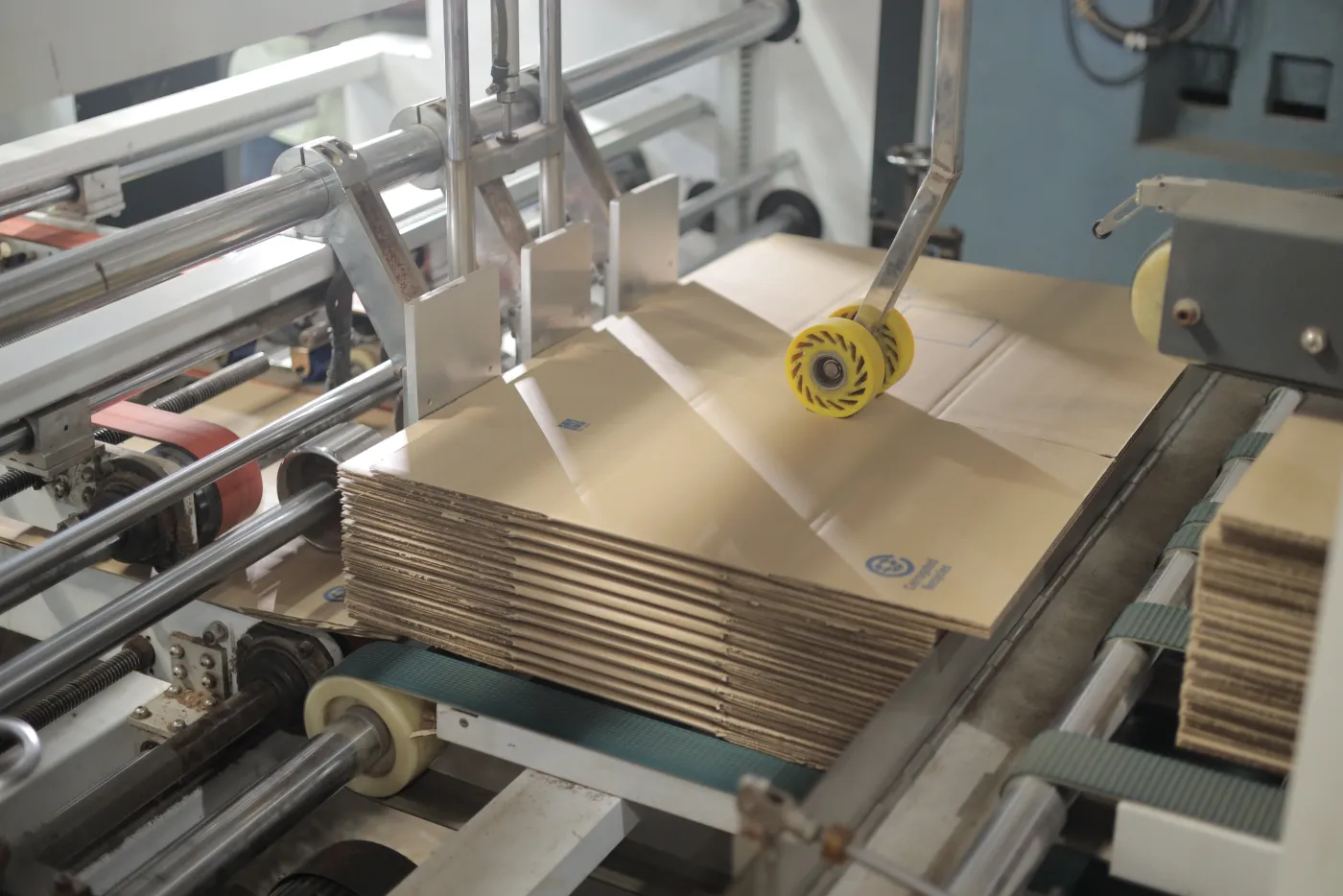
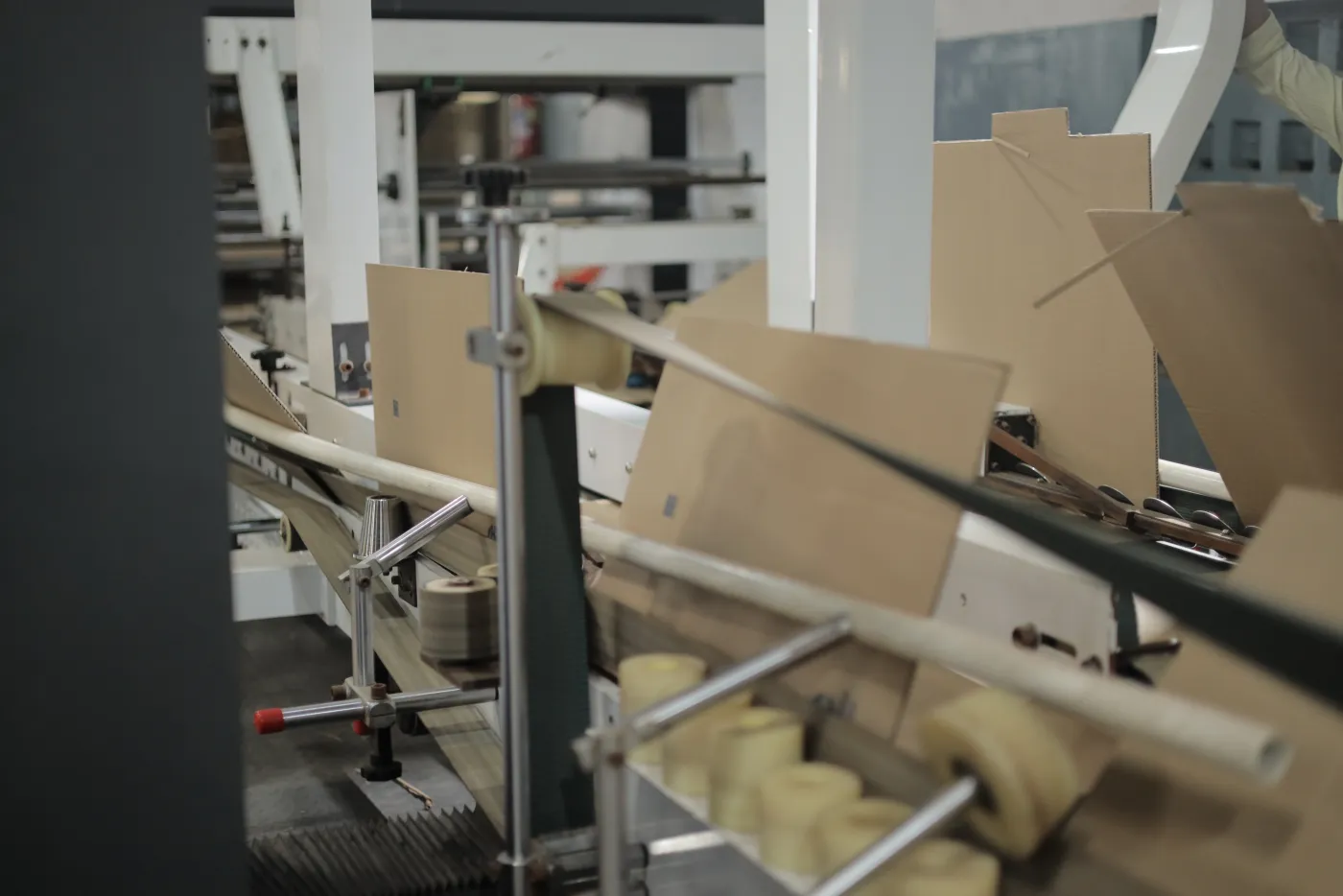
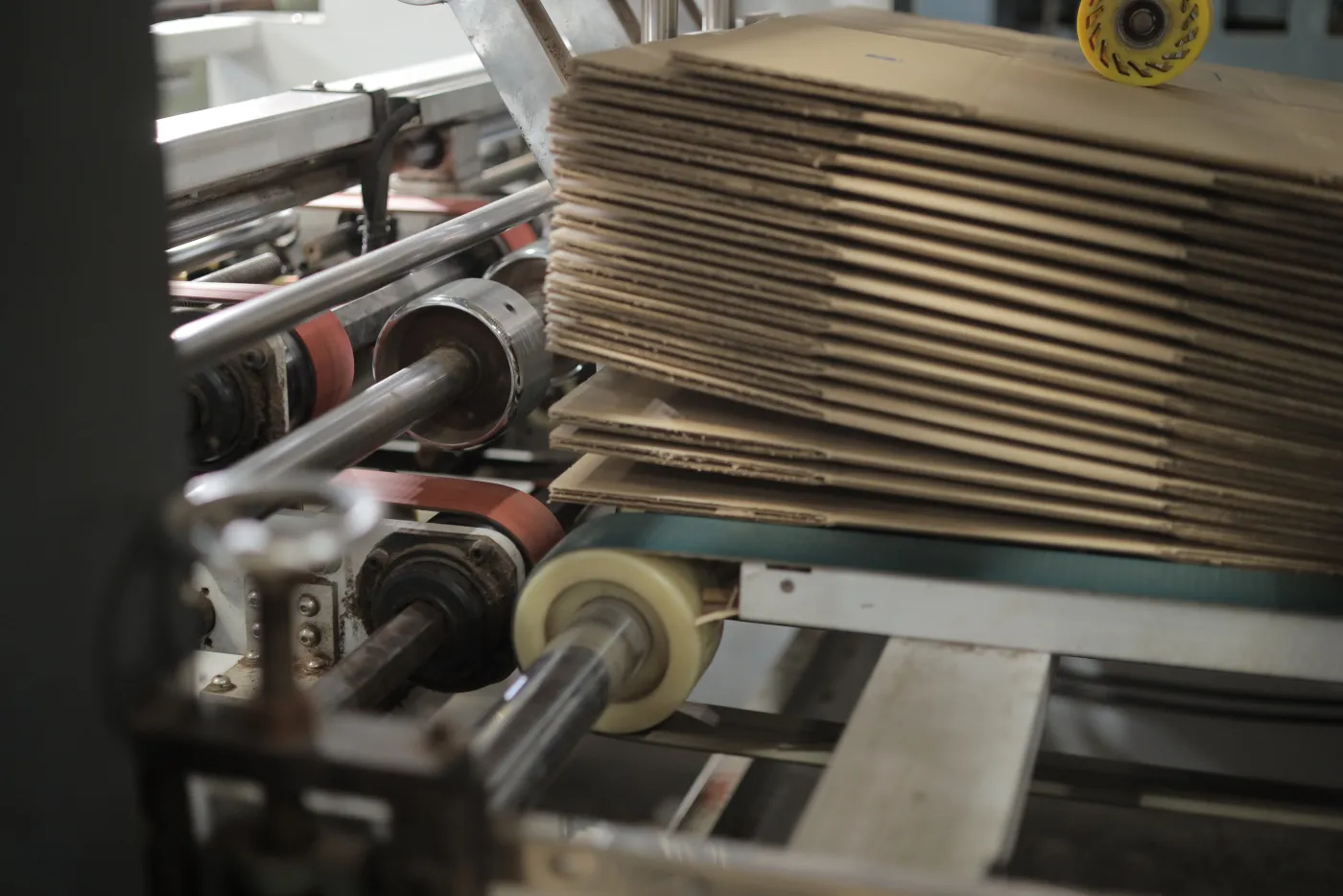
Folding & Stitching / Gluing
The box is assembled using stitching or adhesive, depending on its design and application.
Quality Inspection
Before dispatch, boxes undergo quality checks to ensure they meet customer specifications.
Types of Corrugated Boxes
Different products require different packaging solutions.
Single Wall Corrugated Box (3 Ply)
Consists of one fluted layer between two linerboards.
Suitable for:
- Consumer products
- Retail packaging
- FMCG
- E-commerce
Double Wall Corrugated Box (5 Ply)
Consists of two fluted layers and three linerboards.
Suitable for:
- Heavy products
- Export packaging
- Industrial goods
- Engineering components
Triple Wall Corrugated Box (7 Ply)
Made with three fluted layers and four linerboards.
Suitable for:
- Heavy machinery
- Automotive parts
- Bulk industrial packaging
- High-load applications
Common Corrugated Flute Types
Different flute profiles offer different performance characteristics.
| Flute Type | Approx. Thickness | Best For |
|---|---|---|
| A Flute | 5 mm | Cushioning and fragile products |
| B Flute | 3–4 mm | Retail packaging and puncture resistance |
| C Flute | 3–4 mm | General shipping cartons |
| E Flute | 1.5–2 mm | Premium printed boxes |
| F Flute | 1 mm | Luxury packaging |
| BC Flute | 6–7 mm | Heavy-duty industrial packaging |
| EB Flute | 4–5 mm | Premium packaging with additional strength |
Selecting the correct flute depends on product weight, stacking requirements, transportation conditions, and printing needs.
Advantages of Corrugated Boxes
Corrugated packaging has become the preferred choice for businesses because it offers several important benefits.
Excellent Product Protection
The fluted structure absorbs shocks and vibrations, reducing the risk of damage during transportation.
Lightweight
Despite their strength, corrugated boxes are lightweight, helping businesses reduce shipping costs.
High Compression Strength
Corrugated boxes can withstand stacking in warehouses without collapsing when designed correctly.
Customizable
Boxes can be manufactured in various sizes, shapes, flute combinations, and printed designs to meet customer requirements.
Eco-Friendly
Corrugated boxes are recyclable, biodegradable, and made primarily from renewable paper resources, making them an environmentally responsible packaging solution.
Cost-Effective
They provide excellent protection while remaining economical for both manufacturers and customers.
Industries That Use Corrugated Boxes
Corrugated packaging is used across almost every industry.
Common applications include:
- FMCG Products
- Pharmaceutical Packaging
- Food & Beverage
- Textile Industry
- Electronics
- Automotive Components
- Engineering Products
- Chemical Industry
- E-commerce
- Export Packaging
- Consumer Goods
- Furniture
- Agriculture
Its versatility makes corrugated packaging one of the most widely used packaging materials worldwide.
How to Choose the Right Corrugated Box
Choosing the right box depends on several factors.
Consider the following:
- Product weight
- Product dimensions
- Fragility
- Transportation distance
- Warehouse stacking height
- Moisture exposure
- Printing requirements
- Export or domestic shipment
- Budget
Selecting the correct board construction and flute profile improves product safety while avoiding unnecessary packaging costs.
Why Quality Matters
A corrugated box is only as good as the quality of its raw materials and manufacturing process.
Poor-quality paper, incorrect adhesive application, or inadequate testing can lead to box failure during shipping. That is why manufacturers perform tests such as:
- Bursting Strength Test (BST)
- Edge Crush Test (ECT)
- Box Compression Test (BCT)
- Cobb Test
- Moisture Testing
- Grammage (GSM) Testing
These tests help ensure that every box performs reliably under real-world conditions.
Why Choose Asian Packaging Industries?
At Asian Packaging Industries, we combine decades of manufacturing experience with modern technology to produce high-quality corrugated packaging solutions for businesses across India.
Our strengths include:
- Family-owned packaging business with decades of experience
- Six advanced manufacturing units
- Annual turnover of approximately ₹107+ crore
- 250+ skilled workforce supported by experienced technical staff
- Imported Heidelberg 5-Colour + Coater printing technology
- In-house quality testing for consistent performance
- Customized packaging solutions for diverse industries
- Own transportation fleet for safe and timely deliveries
- Commitment to quality, innovation, and customer satisfaction
Whether you need standard shipping cartons or fully customized printed packaging, our team works closely with you to deliver reliable and cost-effective solutions.
Frequently Asked Questions
What is the difference between cardboard and corrugated board?
Cardboard is typically a single-layer paperboard, while corrugated board contains fluted paper between linerboards, making it significantly stronger and better suited for shipping.
Why are corrugated boxes so strong?
The fluted medium acts like a series of arches, distributing pressure evenly and increasing compression strength while absorbing impacts.
Are corrugated boxes recyclable?
Yes. Corrugated boxes are 100% recyclable and are among the most environmentally friendly packaging materials available.
Which industries use corrugated boxes the most?
FMCG, pharmaceuticals, food processing, e-commerce, engineering, automotive, electronics, textiles, agriculture, and export industries all rely heavily on corrugated packaging.
How do I choose the right corrugated box?
Consider your product's weight, size, fragility, storage conditions, transportation method, and branding requirements. Working with an experienced manufacturer can help you select the most suitable board grade and flute type.
Conclusion
Corrugated boxes are much more than simple shipping containers—they are an essential part of modern supply chains, protecting products from the factory floor to the customer's doorstep. Their combination of strength, lightweight design, customizability, and sustainability makes them the preferred packaging choice for businesses worldwide.
Whether you're shipping delicate electronics, exporting engineering components, or packaging everyday consumer goods, selecting the right corrugated box can improve product protection, reduce logistics costs, and enhance your brand image. At Asian Packaging Industries, we are committed to delivering packaging solutions tailored to your specific requirements, ensuring every box provides the performance and reliability your business depends on.